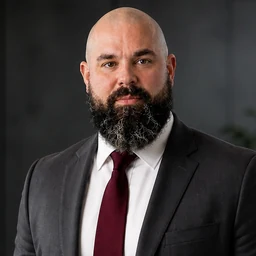
On September 18, the provost of Dartmouth sent a written statement to the student newspaper defending how he uses AI in his writing. The paper ran the statement through the detector it had been using on his published work, and the detector scored his own email as 100 percent written by AI.1 His answer, as the paper printed it, was that he developed the substance and wrote a draft, then used an AI tool to help with language and clarity, accepting several suggestions, including reworded sentences, then reading it through, making minor changes and sending it under his signature. "I am fully responsible for any text under my signature," he added.1
Santiago Schnell had published an essay in the Washington Post on August 9 arguing that because generative AI makes polished work easy to produce, universities "must now devise credible ways to observe the capacities behind it," as the Chronicle of Higher Education quoted it.2 The Dartmouth then tested nine works published solely under his name and reported a median score of 96 percent written by AI, against five articles from 2012 to 2019 that all scored as human.1 Two of the nine acknowledged AI's role in the writing. Schnell had already disputed the description of his Post essay as "100% AI-written," saying he wrote it from his own thinking and used ChatGPT "to help refine a few arguments and check for grammatical errors."1 On September 25 the president announced that an advisory committee of five would review his AI use in his academic publications and public writing, and gave no timeline.3 I take no position on how that review should come out. The story holds two separate lessons for anyone who runs an organization, and they pull in different directions.
The gap is what people react to
Dartmouth's student policy requires disclosure of AI use, and breaking it risks discipline. The college's faculty handbook, according to the Chronicle, makes no mention of AI.2 A campus chapter of the American Association of University Professors put the resulting question in a petition: "How do we ask our students and colleagues to follow the rules when the academic leader of Dartmouth is allowed to break them?"4 Whether a rule applied to him is an argument for the committee. The reaction shows what people compare, which is the standard a leader states for others against the practice they can see.
Look at what the provost himself conceded. In a guest column in the student paper he wrote that he should "always explicitly disclose use of AI in my public writing and be attentive to the expectations of AI use set by publications," and added, "I am sorry that this was not my standard practice and, moving forward, it will be."5 The shortfall he names is the missing disclosure. I have argued elsewhere that handing the tedium of drafting to a model is delegation, and that the human's judgment and problem definition are the authorship. That position survives this story intact, and it makes the gap easier to see: the trouble is a public standard and a private practice that cannot be described in the same words.
A standard you publish for other people becomes the measure of your own practice the moment anyone can test it.
Any executive who has issued an AI use policy in the past year has this exposure. The policy was written about other people's work, and it stays comfortable until someone asks the author to describe, in the policy's own terms, how the author uses the tools.
What a detector score can carry
The second lesson concerns the evidence. A median of 96 percent is a summary of nine numbers, and the individual scores in the paper's breakdown ran from 71 to 100 percent.1 The detector, Pangram, reports its own false positive rate as 0.01 percent, and the paper cites a University of Chicago study, circulated as a National Bureau of Economic Research working paper in September 2025, that found its false positives essentially zero.1 Pangram is a commercial product, so its own figure deserves that context, and the independent study is the stronger footing. Yet a false positive rate answers a question nobody here is asking. His five older articles scored as human, so the detector is not accusing him of sounding like a machine. His defense is that he used AI for editing, and an August 2026 preprint from Notre Dame, as the paper reports it, found that detectors including an earlier Pangram version "cannot distinguish AI editing from full LLM drafts."1 Pangram says its current version rarely makes that mistake, which is the vendor's own claim.
A score speaks to the texture of the sentences. Who chose the argument and who checked the sources is a separate matter that no score answers, and that separate matter is the one the provost's defense rests on. Older research adds a caution about who gets misread. A 2023 study in Patterns found that the GPT detectors it tested consistently misclassified writing by nonnative English speakers as generated by AI, and its authors cautioned against using such tools in evaluative settings.6 Schnell raised that concern himself, writing that detectors are "biased against nonnative English speakers, such as myself."1 His writing from before 2022 scored as human, which weakens that explanation in his case, and the study tested earlier detectors, not Pangram. What it does show is how a number can look like a verdict while carrying a bias nobody in the room can see.
The provost's column includes a line worth holding the institution to. He writes that he has learned Dartmouth's student standards process does not rely solely on such software, and that no student has been sanctioned on the results of Pangram or any other detection software alone.5 That is his description, and I have not verified it. If it is accurate, it sets the rule for the review: a score opens a question, and the person's account, the drafts and the work's history close it. An organization that would not sanction a student on the number alone owes a named senior leader the same procedure. I wrote earlier this month about what happens when one vendor's scores sit beneath many separate decisions, and the caution carries over.
Two questions for your own desk
If your organization has an AI policy, could you state how you use AI in the documents that carry your signature, using the policy's own categories? And the next time a number arrives about a colleague's work, from a detector or an engagement index, do you know what it measures and what the person's own account would add?
If the distance between what a leader asks of others and what the leader does sounds familiar, the Culture chapter of Agile Sucks! (When You Do It Wrong) opens its argument about leadership with a story the book itself calls probably apocryphal: a CEO who fined anyone late to a meeting a dollar per person per minute, until the day he kept his own fifteen-person team waiting ninety minutes. What he said when he walked in is the whole point of the chapter.
Read Agile Sucks! (When You Do It Wrong) →References
- Klee, A., & Pierry, I. (2026, September 21). Op-eds, academic articles by Provost Santiago Schnell flagged as 'AI-written' by 'near-zero error' AI detector Pangram. The Dartmouth. (Student newspaper analysis using Pangram 4.0. The detector's false positive figure is self-reported by its vendor. The University of Chicago study it cites is Jabarian and Imas, NBER Working Paper 34223. The Notre Dame preprint is arXiv 2608.11256.) https://www.thedartmouth.com/article/2026/09/schnell-ai-writing ↩
- Shanley, G., & Vance, S. (2026, September 23). Dartmouth's provost quietly used AI in his published work. It's touched off a campus firestorm. The Chronicle of Higher Education. https://www.chronicle.com/article/dartmouths-provost-quietly-used-ai-in-his-published-work-its-touched-off-a-campus-firestorm ↩
- Hubbard, M., & Sharma, V. (2026, September 25). Beilock announces committee-led review of Provost Santiago Schnell's AI use. The Dartmouth. https://www.thedartmouth.com/article/2026/09/sharma-hubbard-beilock-ai-statement ↩
- Palmer, K. (2026, September 29). Dartmouth provost's 'AI dependency' sparks backlash. Inside Higher Ed. (Petition language attributed to the campus AAUP chapter.) https://www.insidehighered.com/news/governance/executive-leadership/2026/09/29/dartmouth-provosts-ai-dependency-sparks-backlash ↩
- Schnell, S. (2026, September 25). What I've learned about AI and academic integrity (guest column). The Dartmouth. https://www.thedartmouth.com/article/2026/09/provost-schnell-letter-to-the-editor ↩
- Liang, W., Yuksekgonul, M., Mao, Y., Wu, E., & Zou, J. (2023). GPT detectors are biased against non-native English writers. Patterns, 4(7), 100779. https://arxiv.org/abs/2304.02819 ↩